

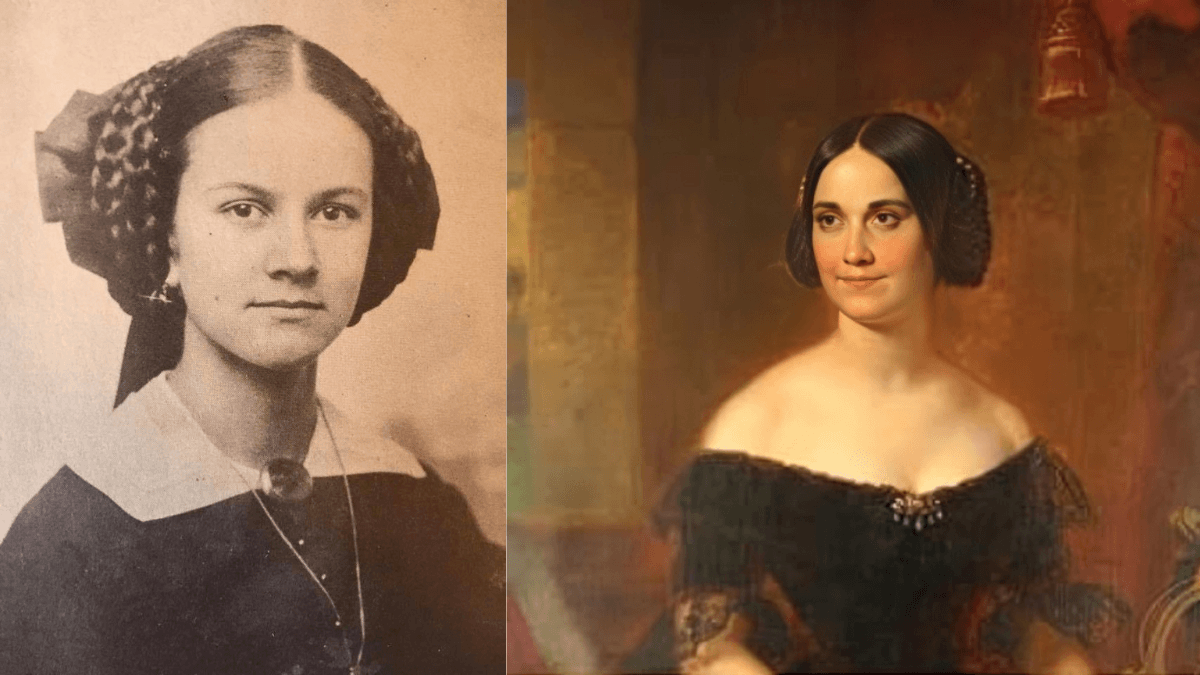
In my studies experience with historic circle of relatives memories, Anna Maria Calhoun Clemson stands proud because her non-public existence was intently connected to the general public world round her. Born in 1817, she belonged to one of the South’s outstanding households, and her function went far past being a daughter, spouse, and partner. She became a manager and steward of family duties, assisting defend a family legacy for the duration of an crucial historical period inside the 19th century South.
Her existence become a tale of quietly shaping an area and legacy that became large than a unmarried life. As a copyist for her effective father, a partner to her worldly husband, and later a guardian of Fort Hill, she skilled warfare, dying, births, losses, journey, and go back. Her years also delivered marriage, management, stewardship, and guardianship, placing her at the center of hard own family and belongings topics.
Across fifty eight years, her tale also worried assets disputes, criminal entanglement, felony subjects, and questions of belongings possession. What started as a deeply personal cutting-edge moving thru public tides regularly linked with the germination of an idea that later reached institutional form. Her return, losses, and obligations helped form an institutional legacy, showing how one woman’s family role ought to affect a much wider public story.
Anna Maria Calhoun Clemson Family and Fort Hill
The story of Anna Maria Calhoun Clemson becomes mainly transferring whilst the figures are regarded as part of a much broader own family story. Three kids were misplaced, while live on to adulthood before their deaths in 1871. A single grandchild, born in 1870, have become the road’s hope. These losses gave her existence a repeated burden of stewardship, as she confronted grief while persevering with her obligations.
As a daughter, she managed the household whilst her father’s profession stored him away. Later, as a wife, she supported a diplomatic life before taking up rebuilding and prison battles after struggle and death had rearranged property traces. Her household control, own family responsibilities, and routine stewardship show how non-public responsibility should retain even during durations of major trade.
Her reference to Fort Hill became equally vital. The house, land, and agricultural promise represented greater than a place to stay. She inherited and held assets hobbies, and her quiet insistence helped guard what she saw because the bodily heart and symbolic coronary heart of her own family. She fought to maintain that heart intact, making her stewardship carefully tied to inheritance, property, and family historical past.
Those efforts were not simply sentimental. They carried real financial consequences and legal consequences, while the property’s status and the standing she maintained supported the possibility of a later bequest. That bequest founded a formal college at Fort Hill, connecting her personal legacy with later institutional development. In this way, financial, legal, and agricultural potential became part of a longer story involving property, college, foundation, and family responsibility.
| Category | Details |
| Full Name | Anna Maria Calhoun Clemson |
| Born | 1817 |
| Historical Period | 19th century |
| Family | Calhoun and Clemson families |
| Known For | Connection to Fort Hill and family legacy |
| Role | Daughter, wife, manager, and steward |
| Historic Property | Fort Hill |
| Major Responsibilities | Household management and property stewardship |
| Legacy | Connected to the later development of a college at Fort Hill |
| College Opening | 1893 |
| Lifespan | 58 years |
| Notable Themes | Family, property, stewardship, grief, and institutional history |
Anna Maria Calhoun Clemson and Fort Hill Legacy
From my studies perspective, Fort Hill may be understood as a seedbed, an area wherein family reminiscence, plantation financial system, and institutional creativeness got here collectively. Anna saved this important location cautiously tended, preserving its connection to her circle of relatives, reminiscence, and the converting economy around the plantation. Her efforts helped maintain an idea alive via conversations, committees, and nearby advocacy, giving its roots room to develop into a much wider imaginative and prescient.
Although she did no longer live to peer the college commencing in 1893, Anna persevered to invest her energy via political activity, social activity, and administrative work. Her imaginative and prescient became linked to an agricultural and medical school, linking training, agricultural study, and science. Her husband later translated that vision into a criminal tool, supporting flip the institutional creativeness into an actual institution. The school and university that could open in 1893 therefore grew from an idea she helped carry forward through political, social, and administrative advocacy.
Final Thoughts
Anna Maria Calhoun Clemson’s likeness, the Fort Hill house, and her persistent own family call stay critical anchors of institutional reminiscence. Portraits, rooms, the residence, and land keep her connection to the wellspring of a local college. Through public memory, her lengthy non-public lifestyles is often represented via emblematic pics of a female, a painted pose, a weathered house, and a plaque sporting names and dates.
That compression can omit the messy arithmetic of estate law, grief, and day by day control that formed her life. Still, her story stays a part of a much wider institutional story, linking circle of relatives records with a public academy. Her property, legacy, and reminiscence join the non-public and public facets of records, even as the Fort Hill residence, land, and circle of relatives keep to maintain an critical region in that local university and institutional records.
FAQs
Who was Anna Maria Calhoun Clemson?
Anna Maria Calhoun Clemson was a 19th-century woman connected to the Calhoun and Clemson families and Fort Hill.
When was Anna Maria Calhoun Clemson born?
She was born in 1817.
What was Anna Maria Calhoun Clemson known for?
She was known for her connection to Fort Hill, family property, and the early vision that later contributed to the development of a college.
What happened to Fort Hill?
Fort Hill remained an important part of the family legacy and later became connected with the college established there.
When did the college open?
The college opened in 1893, after Anna Maria Calhoun Clemson had died.
Why is Anna Maria Calhoun Clemson remembered today?
She is remembered through Fort Hill, family history, and the institutional legacy associated with the property.
