

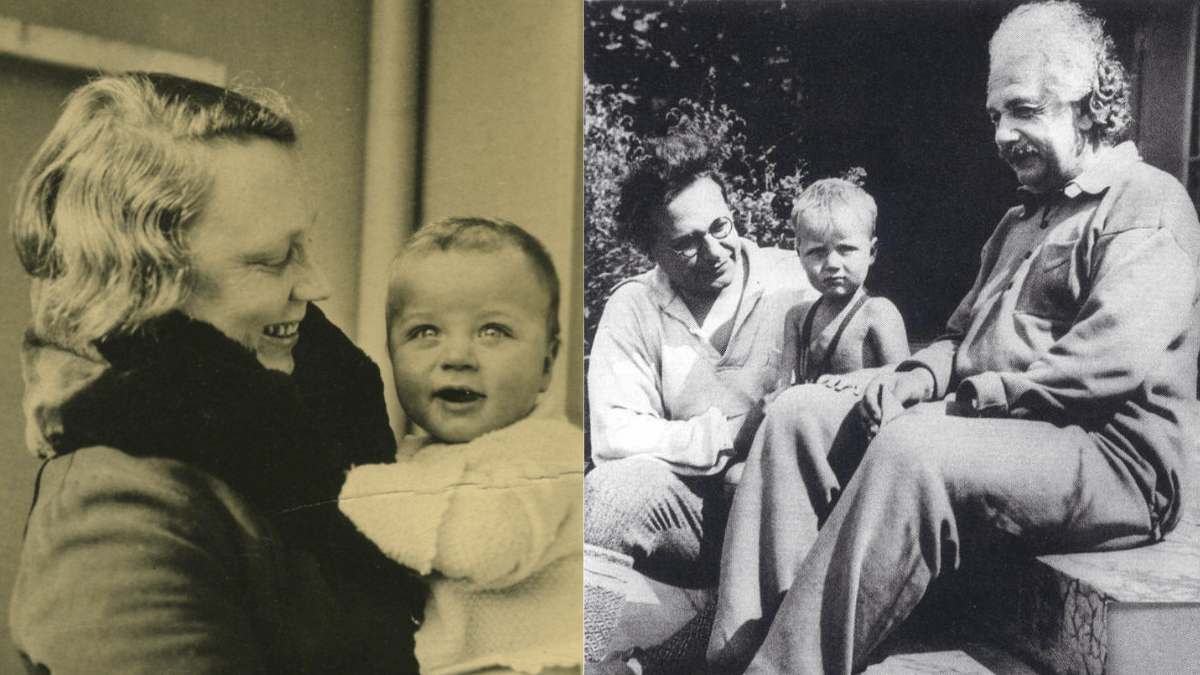
As I search for Frieda Knecht, I find her story interesting because she sits just outside the doors the brightest part of the Einstein global. She became the spouse of Albert Einstein’s eldest son, Hans Albert Einstein, and, moreover, a mother whose children helped establish kinship ties through new international locations, individual professions, and later generations.
Her name is listed as Elisa Frida Einstein Knecht and Frieda Einstein born Knecht. It begins in 1895 and is located in Dortmund with a starting schedule. She was educated, literary and intellectually grounded, with strong ties to education, training and knowledge rather than physics, prestige, general ambition In my view this places her within the Einstein family a different person: were important.
Frieda Knecht Education and Career
Frieda Knecht built her career around German literature, language, and literary education. Her drawings and training in German required stamina, precision and careful interpretation, allowing university students to develop more powerful expertise in language and design her doctorate from the University of Zurich reflects intense academic discipline and strong ties to academic training and scholarship.
Looking beyond the formal, Frida’s international seems deeply connected to books and ideas, while her everyday lifestyle contributed to a discrete aspect of her scholarly nature her existential archive may be restrained, but nonetheless suggests that brilliant brilliance suggests that there has been highbrow and skill. Although she married into one of the most internationally renowned medical families, her own career of specialization began in academia, showing a character built through language, teaching, and disciplined painting.
| Detail | Information |
| Full Name | Frieda Knecht |
| Other Names | Elisa Frieda Einstein Knecht; Frieda Einstein née Knecht |
| Born | 1895 |
| Birthplace | Dortmund, according to one record |
| Profession | German literature and language teacher |
| Education | Doctorate, University of Zurich |
| Spouse | Hans Albert Einstein |
| Marriage Year | 1927 |
| Father-in-Law | Albert Einstein |
| Known For | Her connection to the Einstein family and her academic career |
| Academic Interests | German literature, language, teaching, and scholarship |
| Family Legacy | Her children and descendants continued the Einstein family line across generations |
Frieda Knecht’s Marriage to Hans Albert Einstein
Frieda Knecht and Hans Albert Einstein began dating, which became the defining event in their lives. Hans Albert was born in 1904, and is therefore nine years younger than Frida. Their marriage became a notable part of Einstein’s own family history, especially because of Albert Einstein’s initial dislike of the healthy. Despite his opposition, their romance continued, and husband and wife subsequently married in 1927.
Their union was more than a one-off. It became a tribal group whose influence reached down through generations and shaped their tribal life. Hans Albert developed a career in engineering and academia, while Frieda became the foundation of a family with ties to Europe and America. Even within the mythical family, it remained more unpublic than public, serving as a foundation towards adornment while maintaining a vital kinship and kinship and a meaningful household.
Frieda Knecht’s Family Legacy
Bernhard helped his grandchildren enlarge the family line with new technology. The descendants include Thomas Martin, Paul, Ted, Myra and Karl Einstein. If we look at family trees, it is easy to see how a family can develop into several branches in special places. Later family descriptions conflate those descendants with tracks, buildings, Switzerland, and Israel, showing precise paths that developed through generations.
For Frieda Knecht, these grandchildren form an important part of her own family legacy. Her own family work no longer stopped with the family; It had been established through the lives and choices of later generations. Some branches went into engineering, as others looked into music or private work. These family ties bring her legacy to life, making the extended family history more than a list of names.
Final thoughts
Frieda Knecht does not regularly appear in modern headlines, but her story continues to be seen through relatives’ stories, genealogical data, and social posts regarding the Einsteins. Her appeal can be seen in the churches of the current generation of relatives and other familiar homes in the Einstein district, giving her story a quiet yet enduring dimension .
It turned out that Frida was no longer a public celebrity or publicly decided or counted on speeches or books. Instead, the available evidence points to family, scientific identity, marriage, and descendants as major themes in her story. Her scholarly life and tribal connections formed a kind of ancient account. Through genealogical research and continuing his own family studies, that legacy remains connected to the broader Einstein story.
Frequently Asked Questions
Who was Frieda Knecht?
Frieda Knecht was a German literature teacher and scholar connected to the Einstein family.
Who did Frieda Knecht marry?
She married Hans Albert Einstein, the eldest son of Albert Einstein, in 1927.
When was Frieda Knecht born?
Frieda Knecht was born in 1895, with records linking her birth to Dortmund.
What did Frieda Knecht do for a living?
She taught German literature and language and earned a doctorate from the University of Zurich.
Did Frieda Knecht have children?
Yes, she had children with Hans Albert Einstein, and her descendants continued the family line across generations.
